
Roguetemple’s Fortnight announced!

September 2025 you are challenged to create a traditional roguelike in two weeks! Join the jam now on itch.io so you don’t miss it!

traditional roguelike?

You are challenged to create a game that features gameplay that is:

  • …turn-based, focusing on strategic thinking over quick reflexes.
  • …run-based, with no meta-progression (the player loses ALL tangible progress after each run).
  • …subject to  permanent consequences (the player cannot freely roll back mistakes)
  • …impacted by Procedural Content Generation in a meaningful way
  • …focused on the development of a character, or a party of characters (no abstract puzzle or “god” games)

This is a list of arbitrary design choices that were picked for this jam, and by no means an effort to define what a roguelike is. 

For this jam it is specifically desired to create games that retain these attributes from the first generation of roguelikes, working within their boundaries to experiment with new gameplay mechanics or thematic adaptations.

Please refer to roguetemple’s traditional roguelike values for more information.

Note: The values described above are not black or white; some innovative gameplay ideas may lie in a grey areas and they are welcome as they can be useful to create fun games, which is the ultimate goal. If in doubt about your ideas, feel free to discuss in the community.

Why traditional roguelikes?

The last fifteen years have seen the roguelike word evolve to encompass a wide variety of games; while it is impossible to stop its adoption to describe games that took some elements from the original roguelikes, (or even from a second, or third generation of roguelike-inspired games), there is value on preserving the knowledge of the original roguelike gameplay and keep it alive in the minds of players and designers, and there is no better way to do this than toying around with new game ideas. 
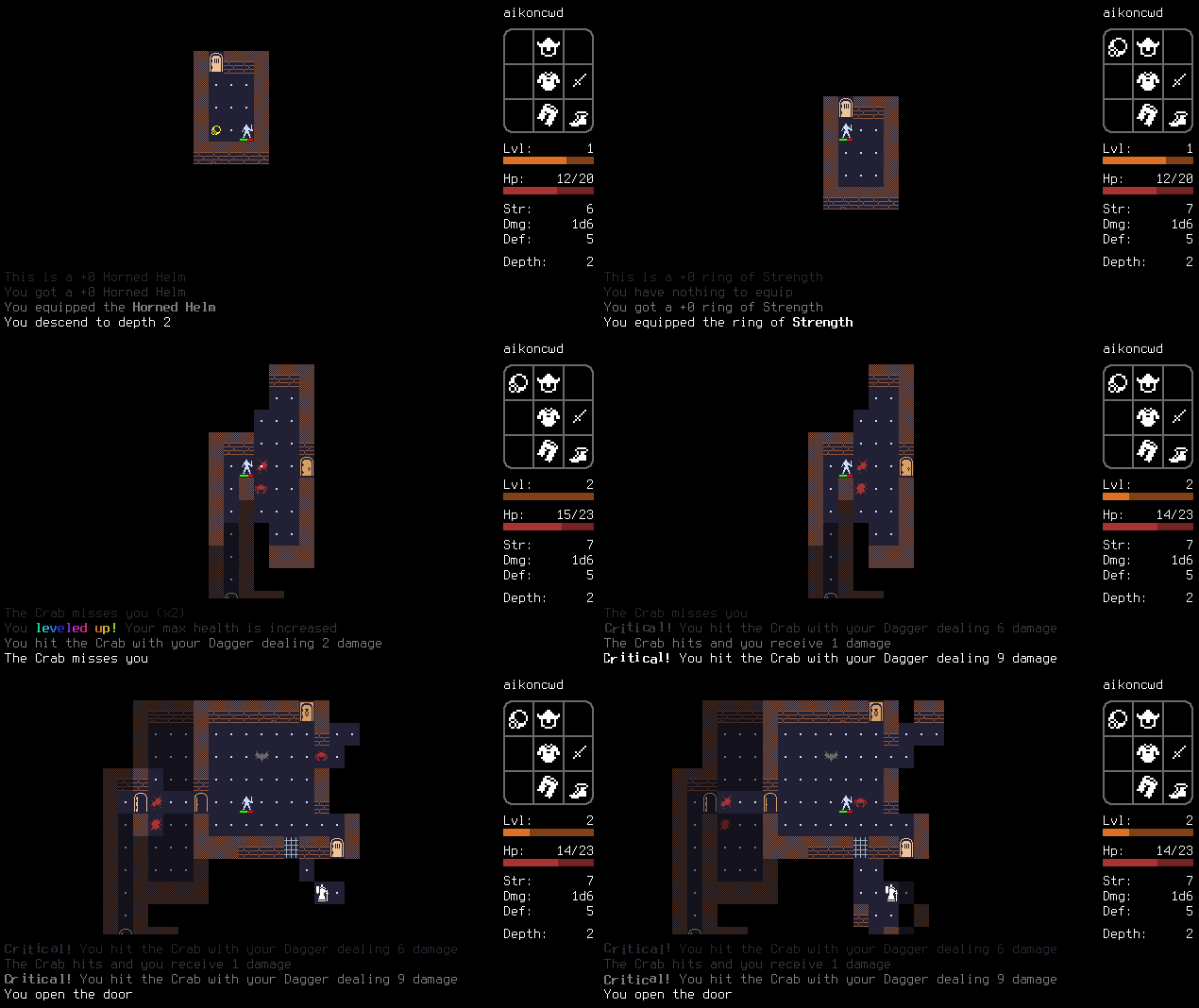
There is still a lot of uncovered potential on this formula that is worth exploring.

The Rules

  1. Your entry should be a traditional roguelike, as described in the section above
  2. You can work in teams.
  3. You can work in the design for your project before the jam starts, provided you don’t extend your work to create actual content that will be added to the game (i.e detailed list of enemies, spells, items, etc).
  4. You can use pre-existing code and assets for the game, provided they could be used for other projects.
  5. Content that is specific to your game, including assets, code, and data, should be developed within the time frame of the jam.
  6. You can develop post-jam versions of the game, provided you keep a link to the original version
  7. You must add screenshots to your entry page.

FAQ

  • Why two weeks? Seven days should be enough

Completing a game in 7 days is a great exercise on product management, however it may not be enough time to fully develop and polish an interesting gameplay idea at a healthy pace of work.
Ma Vie en Rogue

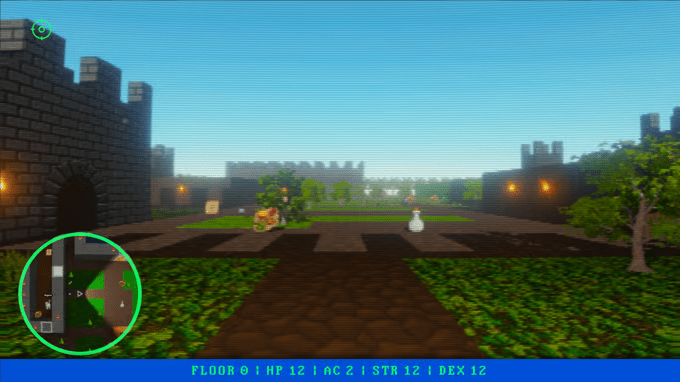
Ma Vie en Rogue” is the name of a new roguelike RPG in development by Fiona Schultz, whose previous work included the futuristic MUD “Alien Prophecy”, and the 3D “Dragon Flight” VR game.

I wanted to make the game I wish I had as a child. A game that explained why the world was the way it was,” she elaborates. “Allowing me to fight back against the monsters and give hope to those who have no tribe.“.

A 12K USD Kickstarter campaign was launched earlier this month, and is fulfilled to about 80% of its initial goal as of the time of this writing; enthusiast backers include Richard Garriott, creator of the Ultima Series.

“Of course I had to back it. At the ‘character of you’ level. Lord British loves to engage with rogues.”

The campaign funds will be used to cover development, production of physical goodies ala old school “big box” games, as well as to bring the talent of Denis Loubet, who painted the cover art for most of the Ultima games.

Ma Vie en Rogue promises to be a fun, engaging game which features:

  • Procedurally-generated worlds
  • First- and third-person views
  • Monster taming
  • Customizable player character
  • TV filter
  • Accessible gameplay

Check out their Kickstarter to help make it a reality!

Rogue Board Game

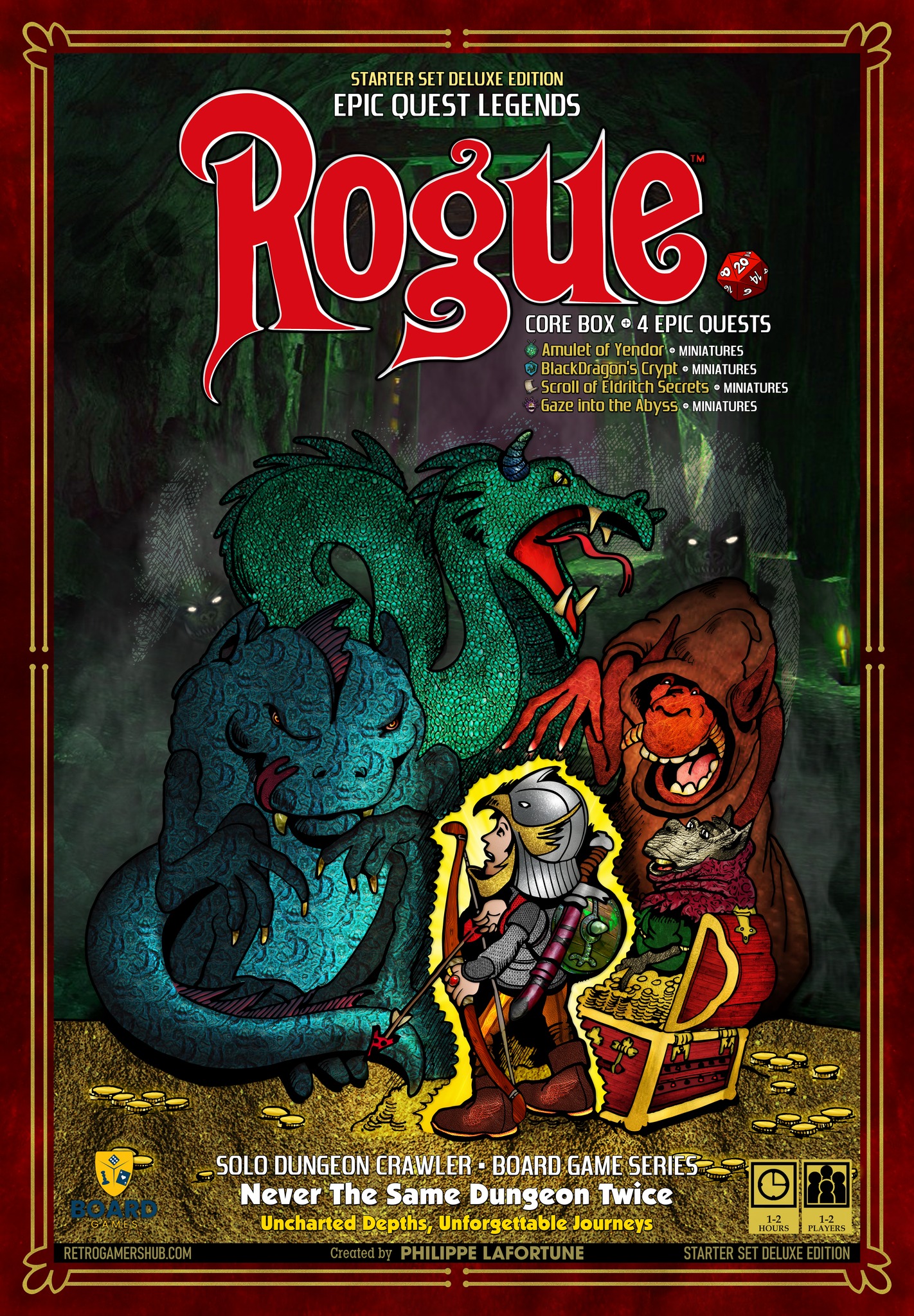
Philippe Lafortune (a.k.a The Geek Connoisseur), is a die-hard retro-gaming fan from Quebec who runs the RetroGamersHub community. Recently, he has been working on a side project to create a board game inspired by an old game called “Rogue”.

Rogue: The Board Game concept is an immersive and challenging board game that immerses players in a treacherous 10+ level deep dungeon labyrinth filled with dangers, treasures, and quests. As adventurers, you must navigate through a series of modular dungeon levels, each brimming with its own unique rooms, corridors, and secrets, capturing all the intricacies of a classic dungeon crawl. This can be played in either Solo or in a 2-4 player Co-op gameplay mode.

The project is on an early stage, as the geek is working on it “as time allows, amidst other priorities and responsibilities”. However, he informs us “a detailed rule book draft has already been meticulously crafted with all my ideas and its unique gameplay details.”

Initially, my idea revolves around developing a Roguelike Core Board Game Set, centered around the classic ‘Amulet of Yendor’ quest. However, I’m also planning other unique and diverse quest add-ons, offering more flexibility to interchange them as desired. These add-ons will enhance gameplay with new elements, creatures, magic weapons, armor, and various game items, accumulating between expansion packs.

Moreover, I’ve been documenting my ideas about gameplay mechanics, its details, and rules. My aim would be to create an engaging and adaptable gaming experience, designed primarily for solo adventures but also capable of accommodating 2-4 players in cooperative mode. Of course, rigorous game testing will be necessary to ensure a seamless and enjoyable experience in both scenarios.

The next step involves giving life to the game board artwork, crafting the various decks of cards planned, designing the game mat and reversible dungeon tiles, and dice, designing miniatures, finalizing the rules, and polishing up other graphical elements. I’m also in the process of creating a digital playable prototype using one of the tabletop simulators!

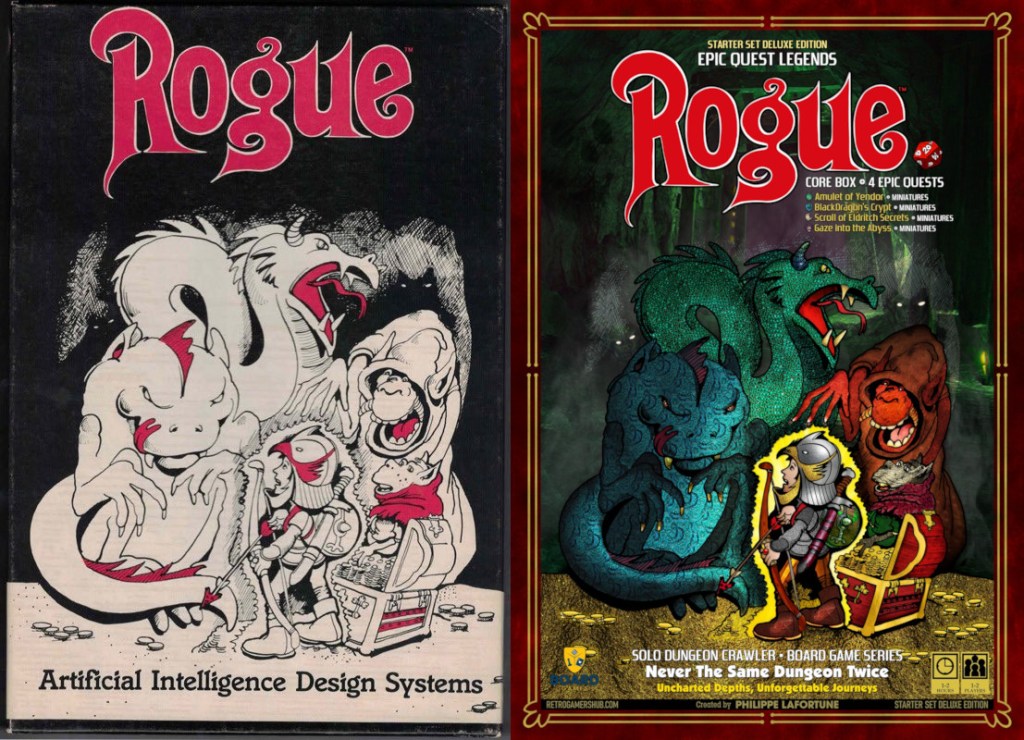
He has recently teased us with an homage to Rogue’s cover art. No, not THAT box art but the original B&W “Artificial Intelligence Designs” made for Rogue’s initial forays outside the mainframe world, back on 1983.

The original cover art and the colorized version

I’ve brought the original monochrome with a touch of red game artwork, from the pre-Epyx era, back to life with a full-color digital mockup. Although there are still a few tweaks to fine-tune, I’m quite satisfied with how it’s shaping up.

The best way to get updates about the project is to follow The Geek Connoiseur in Facebook. I will do my best to keep you updated as well!

I’ve kept a higher resolution copy of the recolored cover in the archive.

BONUS: Here’s a random musing from the very Michael Toy about the cover art

That’s pre-Epyx so that is me and Jon Lane and Mel Sibony who made up AI design, I think AI Design was, at the time of that box, running out of Jon and Mel’s house in Sunnyvale, in true Silicon Valley style.

After some time, they moved into more of an office located at 201 San Antonio Circle, Mountain View. Here’s some info I gathered from the very Glenn Wichman as well:

Yes it looked very different in the 80s. It used to be a mall and office park. John Lane probably knows the most about it. I’m pretty sure they tore down the building we were in.

As I recall they were subletting space from a guy who sold Unix servers. But it was all a long time ago.

Grog – a new small roguelike by Thomas Biskup

Thomas Biskup, the developer of ADOM, has just released “Grog”, a small and very traditional roguelike he has been developing on and off during the last years. Here’s the first-ever recorded gameplay of it; it’s a traditional roguelike to the bone, with some legit intense moments of despair, a rollercoaster of emotions.

Grog was born in 2018, Thomas was inspired to create it while playing rogue and some other very traditional roguelikes during the Roguelike celebration in San Francisco. We were using real terminals connecting to a PDP-11. He fell in love with the charming simplicity of these games.

Thomas started working on the game at his hotel, after the event, just trying to see how much of his idea of a game carrying the “simplicity and purity” of these games could be done on it for 7 days.

I was probably trying to convince him to do a 7DRL here, as we had sushi overlooking Alcatraz.

After this initial push, I believe he went on to all the work in Ultimate ADOM and his many other occupations; it wasn’t until next year’s roguelikecel that he let me know there had been some progress on it, and he even intended to release a version of it before the event started.

It was only until early 2022 that development was resumed. All the core aspects he set to do from the beginning are present in the current version: a small level count with a couple new monsters and a kind of special feature introduced on each.

From the beginning, this was a project that was meant to be more relaxed (and personal!) than the development of ADOM and uADOM. I hope you can enjoy it… get it now at https://roguelike.games/grog/ 🙂

7DRL Celebration and GDC meetup at Roguenet

There have been two further events using roguenet, the first one happened on July 8 with the occasion of the 7DRL reviewing committee finally finishing their reviewing work; the top 12 games by average score where showcased at the temple at another 1 day long celebration, similar to the previous 7DRL Expo.

For this event I managed to add a simple geocaching game, as well as a small but needed feature to know when one person was typing, to prevent awkward typing silences where you didn’t know if the conversation had died already (especially needed because of the private hangouts)

Sometime later, July 21 2021, I decided to use roguenet as a virtual venue for the yearly GDC roguelike meetup; this time I managed to include a big change in the chat feature for experimentation; the private hangouts where replaced with a “shout” kind of interface, where you didn’t have to start and join them but rather could hear whatever nearby people (within your sight) was saying.

In the end it seems a mixture of both conversation systems will be the best; we will only know until next event. I will continue developing roguenet for future events. If you are curious or want to help, you can always check the repo.

First 7DRL Expo @ RogueNet

March 25, 2021, we had the first ever 7DRL Expo at RogueNet.

The temple was set up to host the booths for 11 different roguelike projects, visitors were able to check a video of the 7DRL, and talk with their developers using roguenet’s unique chat interface.

Following the peculiarities of the 7DRL challenge, the event happened on a single day IN YOUR CURRENT TIMEZONE. I created a simple tool to schedule your timing to log into the expo, for increased chances of meeting with the developers of the games.

A new expo, featuring the top 10 7DRLs of 2021 and an improved version of roguenet, is planned to be organized as soon as the review committee shares their results.

Spoiler Alert: The 7DRL Expos are being organized in preparation of the first roguetemplecon, which I hope to run in Q3 2021.

Mail daemon 1

&

If you have anything worth sharing for the mailer daemon next week, please let us know via twitter @roguetemple with the #mailerDaemon tag!

Roguelike Celebration 2020

A report by slashie_

On October 3 and 4 2020, the fifth iteration of the Roguelike Celebration happened online. Last year I missed it (flying Medellín to San Francisco is expensive!) but I had no excuse this year.

The biggest novelty of the event was the MUD-like platform created by Em Lazer-Walker, who has been part of the organizer team for some years now. She describes it as a playful text-based online social chat space, a hybrid between communication apps like Slack and Discord and traditional text-based online game spaces such as MUDs and MOOs.

The main interaction window

The app was accessible via any decent web browser, and it integrated the different components of the online conference, including a virtual environment inspired by the physical spaces of previous years where you could move between rooms, pick up stuff, do fun stuff like dancing, and of course talk with the other people.

A map of the premises

The main sections of the event were the Theater, where the talks took place, the unconferencing lobby and rooms (6 of them) where people suggested and voted for topics and then were directed to Zoom conferences for live video chatting, and the showcase hall where different roguelike projects where on display. There were also lots of other rooms for socializing, and even a dance floor with cool music from the previous years and a bar where you could get the classic roguelikecel cocktails.

Having some polymorphic fun at the bar

The platform was also integrated with the almost non-stop video streaming, MCed by Alexei Pepers and Noah Swartz, and run in the background by Kawa. It included real-time high quality captioning made by Maggie of White Coat Captioning, and people could interact with the stream by posting questions or topics for discussion.

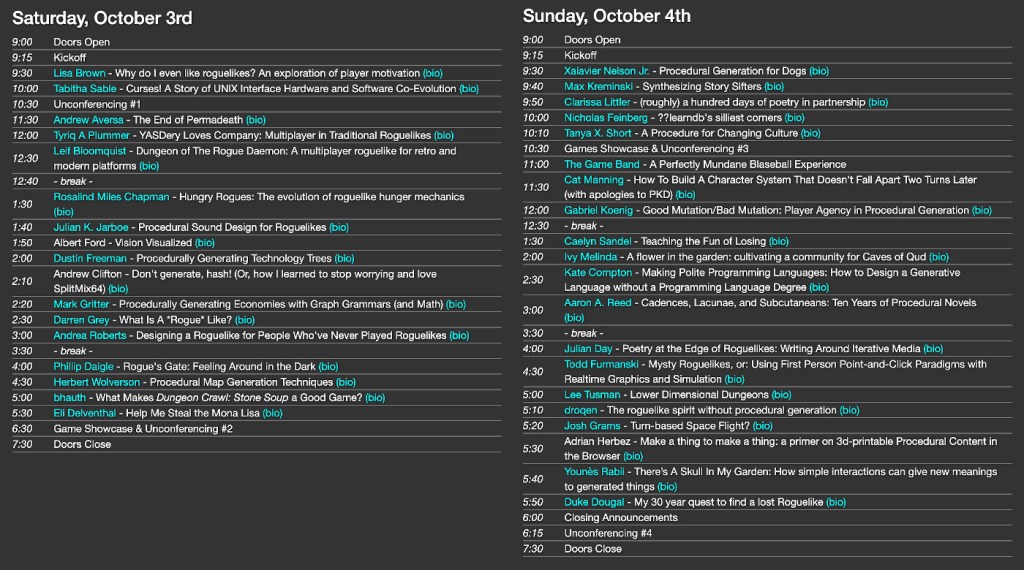
The main chunk of the event where the talks, of course, and this time there were a lot of them both full size and “lightning” (10 mins). following the same format as previous years (single track, two days), being online opened the possibility of having speakers from all around the world discussing a wide range of topics, from technical to more mundane.

The videos have yet to be posted in the Roguelike Celebration youtube channel, for now, you can find the raw streams there. The topics included game design, accessibility, a lot of procedural generation, community management, programming languages, roguelike history, and more.

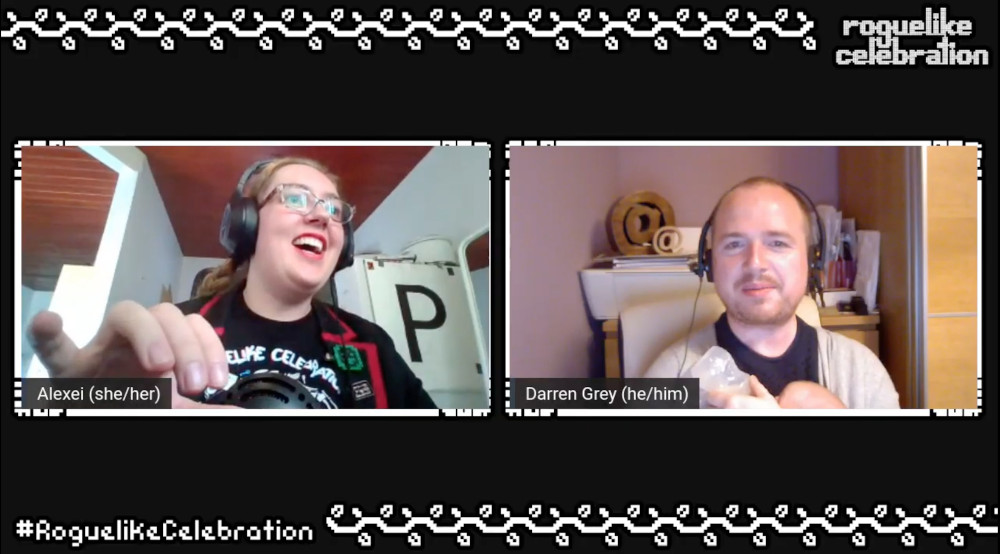
Roguelike Wizard Darren Gray discussed What a Rogue is like, as his baby human quaffed a Potion of Tranquility.

Additionally, as in previous years, there was an interactive game (Help me Steal the Mona Lisa), where players could interact with the streamer, helping him hack devices to infiltrate museums and generate enough income for his character’s luxurious life.

Bundling some procedural generation elements, and a lot of “asymmetrical” cooperative multiplayer design, designed to increase engagement between streamers and viewers.

Finally, Noah (the creator of the event) announced this was his last year as part of the organizers’ team, as he has different requirements for his time these days. He shared how he had a hard time finding space and sponsors for the first event, and how now it has grown to have over 700 participants. He’s leaving the organization of future versions of the events in the capable hands of the other organizers who have done a great job so far.

/me claps, many thanks to Noah for creating this fun event!

See you next year at Roguelike Celebration 2021!